HAIR LOSS DOESN’T MAKE YOU LESS — BUT REGROWTH CAN MAKE YOU WHOLE.
Advanced Hair Transplantation for Women — Performed by Trichologist Surgeons
Hair loss in women isn’t just cosmetic — it’s personal, emotional, and often misunderstood. Unlike male pattern baldness, female hair loss tends to be diffuse, progressive, and hormonal, often affecting self-esteem, styling freedom, and identity.
We offer personalized medical restoration — not a one-size-fits-all solution, but a refined, strategic transplant plan tailored to female biology, hair patterns, and aesthetic preferences.
Why Choose a Hair Transplant?
Hair transplants are the only permanent solution to restore real, living hair where it was lost.
Unlike topicals or pills that offer maintenance or delay, a transplant relocates DHT-resistant follicles to thinning areas — follicles that grow naturally, for life.
At our clinic, every procedure is performed exclusively by trichologist surgeons — specialists in scalp disorders and follicular biology — to ensure maximum safety, density, and harmony with your facial structure.precision.
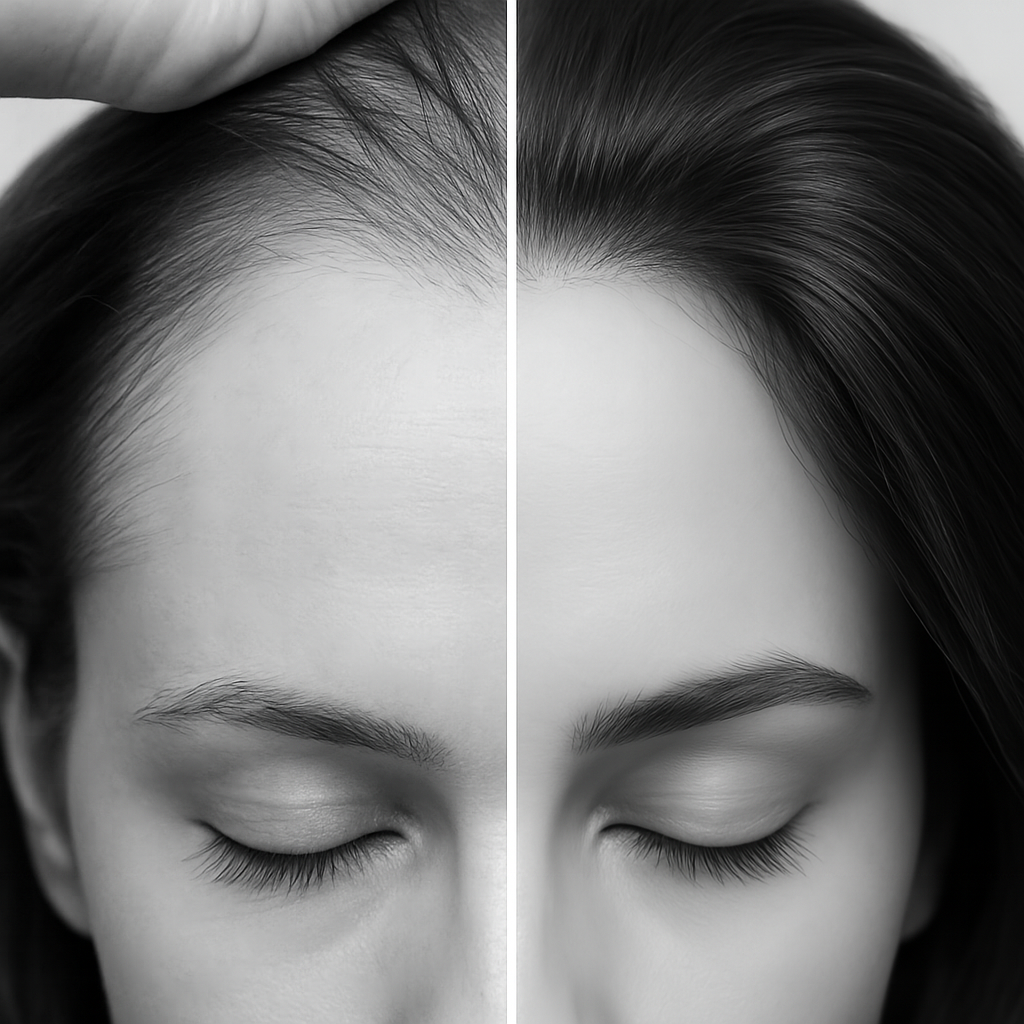
Hair Transplant is the definitive solution for alopecia, hair loss and baldness, offering natural and permanent results.
OUR TECHNIQUE
DIRECT HAIR IMPLANT
- Extraction: Individual follicles are taken from the donor area.
- Direct implantation: Each follicle is implanted with precision without prior incisions.
- Postoperative care: We closely monitor your progress to ensure successful results.
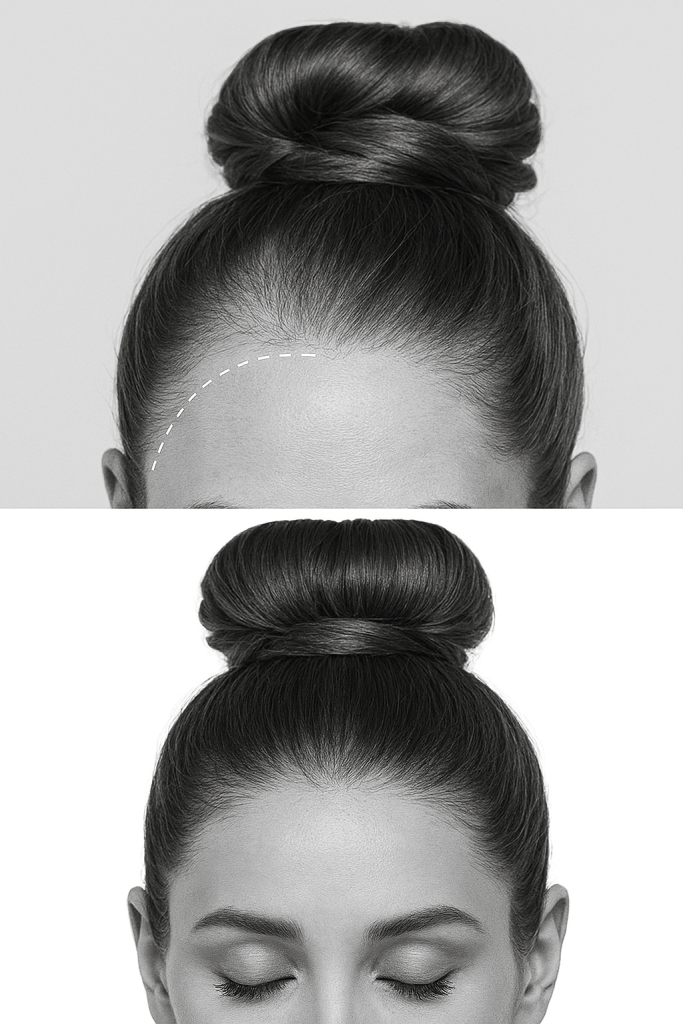
PRECISE CONTROL
over angle, direction, and depth.
No incisions
no stitches
hairline recreation
high-density
Minimal trauma
to surrounding hair
Faster recovery
with undetectable scars
OUR TECHNIQUE IS ESPECIALLY SUITABLE FOR LONG-HAIR TRANSPLANTS
AND HIGH-DENSITY REFINEMENT, COMMON IN FEMALE PROCEDURES.

With our technique, healing is faster, with no linear scars or stitches.
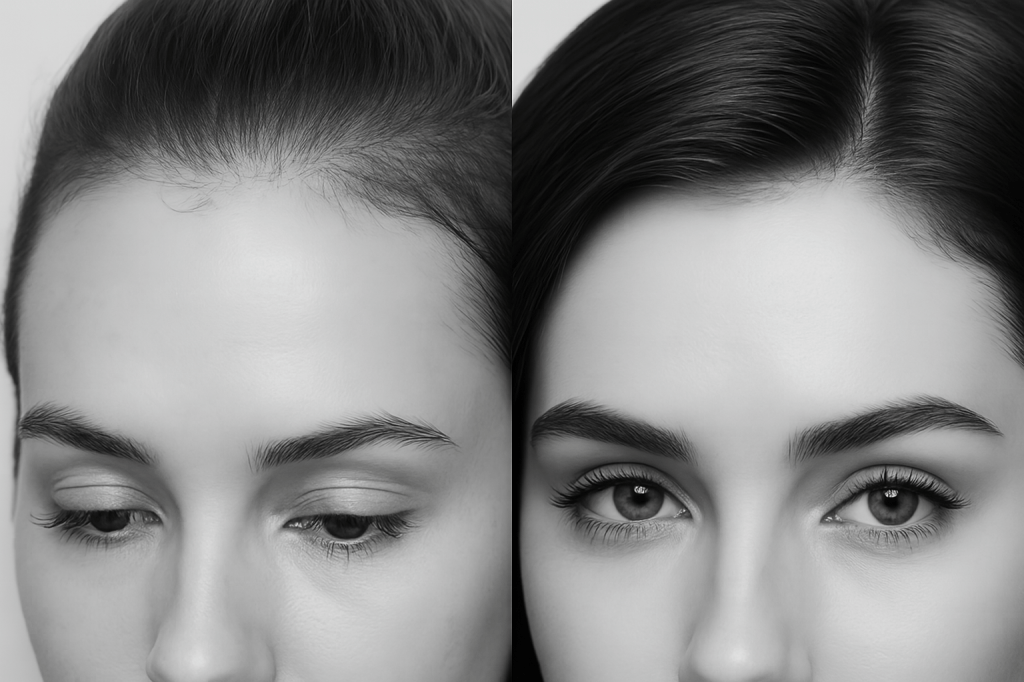
Hair growth starts at 3 months, and full transformation is visible within 9–12 months.
1-day outpatient procedure
Minimal inflammation and fast healing
lasting
density
Who Is an Ideal Candidate?
- Women with stable donor areas (back and sides of the scalp).
- Patients who have responded poorly to topical or oral treatments.
- Women seeking a natural, subtle increase in density.
- Clients with styling limitations due to visible thinning.
- Women recovering from postpartum or hormonal hair loss.
What Results Can You Expect?
Permanent hair
that can be cut, dyed, styled, or shaved.
seamlessly blend
with your existing hair.
No linear scars
no detection — even under direct lighting.
Day 0–2
MILD SWELLING.
No washing or friction.
Day 3–5
Scabs begin to form
and harden.
Day 6–10
SCABS FALL OFF.
Redness fades.
Day 15–30
TRANSPLANTED HAIR SHEDS.
(normal phase)
Week 6+
Dormant
follicles awaken.
Month 3–6
VISIBLE REGROWTH.
Especially in frontal area.
Month 12
FINAL SHAPE.
Texture, and density.
ALL AFTERCARE IS SUPERVISED BY OUR TEAM, WITH SCHEDULED FOLLOW-UPS.
PRE-TREATMENT
– Eat a light snack or meal 30min- 1hr before, stay well hydrated, do not come fasting.
*We don’t give treatment during pregnancy or breastfeeding.
AVOID
+ Avoid alcohol, tobacco, and caffeine for at least 72 hours before your procedure to improve blood circulation to the scalp.
+ Do not apply hair products (e.g., gels, sprays, fibers) on the day of treatment.
+ Aspirin or other non-steroidal anti-inflammatory drugs.
As Ibuprofen, Advil®, Motrin®, Aleve®, Fish oil, Gingko Biloba, St. John’s Wort, and high doses of vitamin E, unless medically necessary 7 days prior.
POST-TREATMENT
Expect temporary shedding (“shock loss”) within 2–4 weeks—this is normal and hair will regrow.
AVOID
+ Touching, scratching, or washing the implanted area for the first 48 hours or as our medical request.
+ Direct sun exposure, swimming pools, saunas, and intense exercise for at least 15 days.
+ Wear helmets, caps, or tight headwear for 10 days to prevent damaging grafts.
+ Haircuts, dyes, or chemicals for at least 1 month, or as medical advice.
~ Sleep with your head elevated (45° angle) for 3–5 nights to reduce swelling.
~ Use only the products provided by the clinic (e.g., saline spray, post-transplant shampoo).
Your femininity. Your profile.
Your expression. Your hair.
It’s not just about hair. It’s about freedom, softness, and self-image — on your terms..
FAQ
Will it look obvious that I had a transplant?
Not at all. In women, subtlety is everything. We use advanced DHI techniques with fine graft placement, no linear scarring, and no visible incisions. Hairlines are designed to be soft, irregular, and feminine — not harsh or “surgical.” Even under direct light or parting, the result blends naturally.
What makes female hair transplants more complex than male ones?
Female hair loss is rarely about just the temples or crown — it’s diffuse, hormonal, emotional, and often still progressing. That means the approach must be multifactorial. Our trichologist surgeons analyze hormonal influence, hair cycles, and follicular miniaturization, then craft a strategy that addresses both density and long-term management.
I haven’t gone fully bald — is a transplant still worth it?
Yes — and in fact, that’s the best time to act. When miniaturization is visible but scalp coverage still exists, we can strategically implant follicles to reinforce weak zones, create density illusions, and preserve styling flexibility before total loss happens.
Will I need to shave my head?
Only a small donor area shave, hidden beneath long hair. You’ll leave the clinic with your existing hairstyle — and within a while, the signs are barely noticeable.
How do you create a natural female hairline?
We don’t draw straight lines. Female hairlines are soft, curved, and asymmetrical. Our surgeons use microdensity mapping to create a feathered, age-appropriate line that restores framing without looking “done.”
What’s the difference between a trichologist and a regular surgeon?
A trichologist surgeon understands not just the technique — but the biology behind your hair loss. They specialize in scalp disorders, hormonal triggers, follicular pathology, and hair cycle dynamics. This means your treatment is not just aesthetic — it’s medically strategic.
Will the new hair behave like my natural hair?
Absolutely. The transplanted follicles are genetically yours — they grow, shed, and rest just like the rest of your hair. You can wash, style, dye, or curl it freely. It’s not a wig, not artificial — it’s your real hair, back where it belongs.
What happens to the hair I’m still losing?
We protect it. Female transplants are often combined with PRP, mesotherapy, exosome therapy, or oral treatments to stabilize surrounding follicles. Think of the transplant as your foundation — and our holistic care plan as the maintenance that protects everything around it.
 HMC Hair Medical Care Colombia